Rent a car with a driver in Riga.
  • Car rental with driver
    • Premium car
    • Minivans
    • Bus and minibus
  • Concierge service
    • Transfer service
    • Personal driver
    • Excursions
    • VIP center of Riga Airport
  • What to visit in Latvia
    • Sights Of Riga
    • Sights of the Vidzeme region
    • Sights of the Kurzeme region
    • Sights of the Zemgale region
    • Sights of latgale
  • Contacts
    • Booking a car
    • Bus reservation
    • privacy policy
  • English
    • Русский
    • Latviešu valoda
  • Click to open the search input field Click to open the search input field Search
  • Menu Menu

Archive for category: Sights Of Riga

You are here: Home1 / Sights of Latvia2 / Sights Of Riga

Sights Of Riga

Sights Of Riga

What to see, where to go and where to relax, having arrived in Latvia? One of the most interesting and attractive places for tourists is Riga. The main attractions of Riga are concentrated in the heart of the city – Old Riga, where the streets are still lined with cobblestones and where the medieval color of the city is felt. Outstanding architectural monuments from different eras have been preserved in Riga. The main attraction of Riga is the Old Riga district (‘Old Riga’) with dozens of old buildings.

Powder Tower

Powder Tower

23.02.2020/0 Comments/in Sights of Latvia, Sights Of Riga/by CST SIA

Powder Tower

Powder TowerThe Powder Tower is the only fragment of the defense system of Riga that has survived to this day. The first written records of this tower are found in the annals of 1330. Especially for the master of the Livonian Order, a hole was made in the fortress wall of Riga with a cannonball through which he entered the conquered city. After the conquest of Riga by members of the order, it was decided to reconstruct and strengthen the city’s fortification system. So, according to one version, the famous tower appeared. However, there is another theory that states that the tower was built at the end of the 13th century, that is, before the conquest of Riga by the Order.

According to available archival data, the tower initially had the shape of a horseshoe, and only by the middle of the 14th century found its current, cylindrical shape. The system of fortifications of the city consisted of 28 towers, which at different periods of history were rebuilt and received different names.

In one of the periods, the Sand Tower was also rebuilt, it was turned into a six-story building and between the upper floors a so-called pantry was designed to catch enemy cores. The master of the Livonian Order was the inspiration for the reconstruction. However, already in 1621 the tower was destroyed as a result of hostilities during the Swedish-Polish war. However, the fortification system was reconstructed, and the tower returned to life again. There is a version that after these military operations she got her current name and began to be called Porokhova. However, again, this is only a theory.

According to the second version, the tower got its name in times of peace, when it was adapted for a warehouse in which gunpowder was stored. However, this version is not convincing. There are also several opinions regarding the nuclei embedded in the wall of the tower. One of them says that all these nuclei are an echo of the numerous sieges of the city by Russian troops. And the second theory says that these nuclei appeared only after the reconstruction of the 30s of the 20th century. According to this version, the cores were specially embedded in the walls of the tower by restorers.

During the years of the Russian Empire, the tower turned out to be unclaimed, and by the middle of the 19th century the question arose about the liquidation of all fortifications, since they limited the city and did not give it the possibility of territorial growth. And already in 1856, a plan for the reconstruction of the city was adopted, according to which all the fortifications were to be demolished. However, this time the Powder Tower was pardoned, however, they did not find the destination and it was empty for another 30 years.

Since 1892, a new round of history begins for the tower. Now it belongs to students who made repairs at their own expense and equipped a beer hall and several dance halls in the tower. Beer is notorious for having nationalistic ideas voiced in it. The very name of the tower can be connected with the formation of Nazism, because at different times such ideological inspirers of the movement of brown shirts as M.E. Scheibner-Richter and Arno Shikedants appeared in it. The tower performed its new function until 1916. Only with the outbreak of World War I, students were forced to leave their homes.

The tower of the Museum of Latvian Riflemen opens, and then the Military Museum replaces it. In 1938, the Powder Tower survived another restoration and finally acquired a modern look. However, with the establishment of the USSR regime, changes again took place in the tower, and a naval school named after Nakhimov was opened in it. And in 1957 a museum was reopened in the tower, this time the Museum of the October Revolution. In 1991, the authorities changed, and the Military Museum again operates in the tower. This museum operates today, its exposition is rich in a variety of exhibits telling about the history of the country.
https://balticcars.eu/wp-content/uploads/2018/06/Powder-Tower-in-Riga1.jpg 285 380 CST SIA https://balticcars.eu/wp-content/uploads/2018/03/fav.png CST SIA2020-02-23 13:41:322020-02-23 14:37:49Powder Tower
Art Nouveau in Riga

Art Nouveau

23.02.2020/0 Comments/in Sights of Latvia, Sights Of Riga/by CST SIA

Art Nouveau

Art Nouveau in RigaArt Nouveau began in the late 19th and early 20th centuries. Art Nouveau or Modern is the German name for the Art Nouveau style.

Speaking about Riga, locals usually use the term “art nouveau” rather than “modern”. Modern is one of the branches of the Art Nouveau style, its German variety. Translated from German, Jugendstil means “young style.” It got its name from the popular German magazine “Jugend” (“Youth”), which began to be published in Germany in 1896.

From 1902 to 1914, all Riga architects used the techniques of modernity and, of course, its decorative forms in their work. It is almost impossible to find a building in the Riga buildings of this time, in which the style of modernity has not manifested itself in one way or another. This applies even to buildings that are created in the spirit of other concepts.

Modern is characterized by simple geometric lines and shapes. Architects sought to make the facade elements as decorative as possible: stylized ornaments, garlands of flowers, sculptures of various animals, statues of women, winding bindings of balconies and staircases, faces. The facade of buildings in the style of Art Nouveau could even judge the owner and history of the house.

One of the most prominent architect in Riga was Mikhail Eisenstein, who worked in the Baltic State Property Management, and was engaged in private architecture. According to the son of Sergei, the famous filmmaker, Mikhail Eisenstein built about 53 houses in the Modern style.

The architecture of Riga.

Sights of Latvia


https://balticcars.eu/wp-content/uploads/2018/06/YUgentstil-Rige-Latviya.jpg 285 380 CST SIA https://balticcars.eu/wp-content/uploads/2018/03/fav.png CST SIA2020-02-23 13:31:072021-02-02 11:06:20Art Nouveau
Riga Motor Museum

Riga Motor Museum

23.02.2020/0 Comments/in Sights of Latvia, Sights Of Riga/by CST SIA

Riga Motor MuseumRiga Motor Museum

Riga Motor Museum is the largest museum of rare auto and mechanical transport in the Baltic countries, which was founded in 1989.

On April 22, 1989, the opening ceremony of the Riga Motor Museum was held. The opening date was symbolic: a clean-up day on Lenin’s birthday, on the day on which the legendary Auto Union was rescued from the ZIL plant in Moscow in 1976. With the opening of the museum, at that time (and today) the largest antique car museum in the Baltic States was added to the number of significant cultural and educational institutions of Latvia. In 1989, 75,000 people visited the new museum, a year later the number grew to 130,000.

The purpose of the museum is to collect, exhibit and explore rare cars and mechanical vehicles, to study the history of their appearance, use and development, including to show the development of the history of the automotive industry in Latvia.

Cars, mopeds and bicycles made in Latvia.

The Riga Motor Museum is an opportunity to see such examples of the Latvian automotive industry as the Russo-Balt fire truck, Ford cars Vairogs V8 and Junior-10 models created by the Riga carriage factory, as well as the products of the Riga Bus Factory (RAF) – well-known minibuses and passenger bus RAF – 976.

Kremlin automobile collection

In the Kremlin collection, the museum’s motor can be seen at the top-class limousines of the leaders of the USSR, luxury imported cars of the 30s of the last century, as well as L.I. Brezhnev.

Pre-war cars and motorcycles

The museum displays both Ford-T (1919) and the Chevrolet-Superior mod, popular around the world. “F” (1924), as well as less well-known car models, such as the 12/50 Tourer, released in Germany in 1924. In the exhibition you can see German cars produced in the second half of the 30s of the last century. For example, the BMW-328 sports roadster, the small mass car Mercedes-Benz 170V, as well as the exclusive Horch-853.

Special and military equipment

The exposition hall of the ground floor presents military equipment that was fought on the Eastern Front. The collection includes military motorcycles and automobiles from Germany and the Soviet Union, as well as a Studebaker US 6 truck, Willys MB light SUV, Harley-Davidson WLA 42 and Indian 741 B motorcycles received in 1942 from the US Lend-Lease

Racing cars

In the permanent exhibition of the Riga Motor Museum there is an opportunity to look at a unique collection of racing and record cars. Auto – Union Typ C / D car (Germany 1938) designed for mountain competitions, one of the most unique exhibits in this collection and the entire museum.

Cars and motorcycles of the Soviet era

The Riga Motor Museum was given possession of many well-preserved Soviet cars, which occupy an important place in the museum’s exposition, starting from the first Moskvich and ending with various Lada models. The museum’s collection quite fully shows cars that used to drive along the roads of the USSR.

Riga Motor Museum for children. Road safety

The main goal of the Road Safety classes is to introduce children to the basics of traffic safety rules, as well as prepare them to take a theoretical right test for cyclists. The Riga Motor Museum offers the opportunity to take the CSDD exam both for groups and individually.

Science and technology

In classes on science and technology, children and adolescents will be able to try various experiments related not only to the history of the automotive industry, but also various everyday things that they probably never thought about.

Automotive History Tour

Riga Motor Museum offers a special tour of the history and development of the automotive industry for children and young enthusiasts. A guided tour takes about 40-60 minutes.

Museum activities for children

Riga Motor Museum offers an interactive tour for children in accordance with their age, as well as congratulations to the hero of the day. You can continue the celebration after a tour of the museum in a cafe or teacher’s class.

Also offers festive events in the sports complex “Bikernieki” on the motorway, at ul. Eisenstein 4.

To make an appointment on the day of the celebration, please call +371 67025888 in advance. For reservation of a cafe or a holiday table, please contact the cafe’s administration +371 25367109, e-pasts: info@mmcafe.lv.

Interactivity – what should children do in a museum?

A visit to the Riga Motor Museum is an exciting adventure for the whole day. In the museum for children, interactive workstations, recreation areas with various games, a playground where young car enthusiasts can feel like driving a car are available.

Car track

On the basis of the Bikernieki sports complex, there is a section on auto-modeling, in which children and adolescents are offered the opportunity to construct cars themselves, which can then take part in competitions. In the section there is an opportunity to get initial knowledge about technology, electronics and metalworking.

Led the exam.

Along with the car, the bicycle is also a full-fledged participant in the traffic, for which you must have a driver’s license. Riga Motor Museum offers the opportunity to take the CSDD exam both for groups and individually.

Information for visiting Riga Motor Museum

Riga Motor Museum is waiting for you every day from 10:00 to 18:00. A visit to the exposition can take you about 2 hours, so we recommend you to arrive in advance, until 16:30.

Holiday Hours:

The museum is closed 24., 25., 26., 31. December and 1 January

https://balticcars.eu/wp-content/uploads/2018/06/Rizhskij-motormuzej-1.jpg 285 380 CST SIA https://balticcars.eu/wp-content/uploads/2018/03/fav.png CST SIA2020-02-23 13:06:362020-02-23 14:49:30Riga Motor Museum
The Bremen town musicians

The Bremen Town Musicians

22.02.2020/0 Comments/in Sights of Latvia, Sights Of Riga/by CST SIA

The Bremen Town Musicians

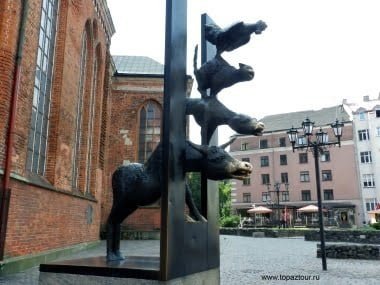
The Bremen town musiciansThe Bremen Town Musicians is a Monument – to the heroes of the fairy tales of the Brothers Grimm – standing in the very center of old Riga. As you know, the heroes of the tale – a donkey, a dog, a cat and a rooster – go to Bremen to become musicians, but along the way they encounter robbers who are frightened by their singing, standing on top of each other. The robbers run away in fear, and the musicians remain to live in their house.

The first monument to Bremen Town Musicians was created by German sculptor Gerhard Marx in 1951 for the city of Bremen. The bronze sculpture represents the main characters of the tale, standing on top of each other and singing a song. The monument has become a symbol of the city.

Based on the sculpture, the sculptor Krist Baumgartel created a similar, but original monument in 1990. Bremen, twin of Riga, presented this monument to the capital of Latvia. The twin cities of Bremen and Riga are rightfully bishop Albert Buxheveden, the founder of Riga was a relative of the Bremen Archbishop. It is also believed that the German merchants who first landed at the mouth of the Daugava in the 11th century were from Bremen (although no documentary evidence was found for the legend).

The monument became one of the sightseeing sites of Riga. And not only children are eager to take pictures with memory of Bremen musicians. Today the donkey’s nose – and the donkey stands at the very bottom of the composition, has become noticeably lighter, because touching it is considered a good omen. There is an opportunity to realize three more desires, to rub the noses of other animals. The most secret desire is fulfilled by a rooster, which is most difficult to reach.

https://balticcars.eu/wp-content/uploads/2018/06/The-Bremen-town-musicians-in-Riga.jpg 285 380 CST SIA https://balticcars.eu/wp-content/uploads/2018/03/fav.png CST SIA2020-02-22 22:37:372020-02-23 14:35:54The Bremen Town Musicians
Cat's House

Cat House

22.02.2020/0 Comments/in Sights of Latvia, Sights Of Riga/by CST SIA

Cat House

Cat's HouseCat House This building is located in the central part of the Old Town of Riga, built in 1909 by the architect Friedrich Scheffel in the style of late rational Art Nouveau.
Both cats on the building called “Cat House” are extremely symmetrical, they adorn the turrets above the intersections of Meistaru and Maza Smilsu (Malaya Peschanaya) and Meistaru – Zirgu (Horse) streets. The central facade of the building is distinguished by its symmetrical composition; in the middle of it is a sculptural symbolic image of an eagle with spread wings, ready to soar into the sky – this image is also made in accordance with the principle of a central point of symmetry; it is a symbolic indication of an eternal struggle until a victorious end is reached. The eagle is able to look at the sun without blinking, which was one of the reasons for recognizing this bird as a key solar symbol – this functional content contributed to the official inclusion of the eagle in the concept of modern symbolism.

There is an old legend that has not been verified by anyone, according to which the wealthy homeowner Blumer (Plume), unhappy that he was not allowed to become a member of the Riga Big Guild, the representative body of the Riga merchants, undertook an act of psychological retaliation. He ordered sculptural images of black cats with arched backs and placed them on the pointed pedestals of his apartment building, located on the opposite side of Meistaru Street (at the modern address Meistaru Street 10/12). However, these cats, to top off the picture, were turned with their tails towards the windows of the office of the elder of the Big Guild, so the non-diplomatic aspect was precisely in the most vulnerable spot.

According to one of the traditional excursion tales, a lawsuit was launched against Blumer, but legal measures failed to get Blumer to deploy the cats. Blumer was a good friend of a judge, or he paid generous bribes to frequently changing judges, who in a sentence with all responsibility declared that these cats walk on their own, they are free animals and without them Riga will lose some of its architectural wealth. It is difficult to say when the world was concluded with an obstinate and unyielding gentleman by the name of Blumer (Plume), but in the end, sooner or later, the cats were deployed with the “right” angle.

https://balticcars.eu/wp-content/uploads/2018/06/Cats-House.jpg 285 380 CST SIA https://balticcars.eu/wp-content/uploads/2018/03/fav.png CST SIA2020-02-22 22:33:332020-02-23 14:33:12Cat House
Домский собор

Riga Dome Cathedral

22.02.2020/0 Comments/in Sights of Latvia, Sights Of Riga/by CST SIA

Riga Dome Cathedral

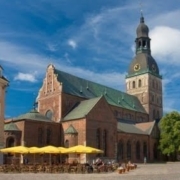
Домский соборRiga Dome Cathedral is a symbol and one of the main attractions of the city of Riga. Dome Cathedral is the largest medieval church in the Baltic countries. First of all, the Dome Cathedral is identified with religion and faith. The Dome Cathedral, not just a building – this architectural project is listed in the World Heritage Register, for more than a hundred years now it has been glorifying the name of its architect E.F. Walker. The name of the cathedral comes from Latin expressions – “Domus Dei” (“House of God”). Currently – the main church building of the Evangelical Lutheran Church of Latvia. Along with St. Peter’s Church and St. Ecob’s Cathedral, it is the high-rise dominant of Old Riga and the forming urban element of the old city (in particular, the key building of Dome Square).
Its builder was Bishop of Riga Albert, founder of the Order of the “Brothers of Christ of Chivalry”, better known by the name of the Swordsmen. With their help, he conquered the Liv tribes and settled in Livonia. In 1210, a fishing village near the episcopal compound burned down, and Albert took the opportunity to seize this piece of land. In 1211, the first stone was laid in the foundation of the cathedral and the land allotted for construction was consecrated. The temple spent huge funds collected in the form of taxes from the conquered Baltic lands. Episcopal Cathedral was to surpass the church of St. Petra, which then began to build artisans and merchants of Riga. Albert invited architects from Germany and set before them the task of building a temple in a new, flourishing Gothic style. The grand vaults supported by columns, stained glass windows, the abundance of sculpture, the plan in the form of a cross – all these features of Gothic architecture were completely not characteristic of local architecture, therefore the magnificent building of the cathedral towered above the city as a symbol of the triumph of the Catholic Church.

A monastery was built near the Dome Cathedral for the Dome Chapter. At the end of the 16th century, an organ was installed in the cathedral. The cathedral acquired its final form only in the 18th century, after several reconstructions. For example, the shape of the tower, which was struck by lightning four times, during restoration each time changed depending on the tastes of the era. The organ hall in the Dome Cathedral, one of the most popular places for tourists. The body, which has incredible acoustic power, has four sets of hand keys. It was reconstructed three times. The works for the great organ were written by many prominent composers and gave their concerts right in the cathedral. At the time of its construction in the world there was no body that would exceed this in size.

Over the years, the cultural layer around the cathedral has grown significantly, since the cathedral has stood indestructibly all these years, and around it the settlements have disappeared and again new settlements have appeared. Now, in order to get inside the church you need to go down the stairs, and before you had to go up, but time does not stand still. The Dome Church itself was restored in 1959 – 1962, the interior was recreated in it exactly as it was more than four hundred years ago, and the organ still sounds under its arches. Today in the monastery buildings is the Museum of the History of Riga and the Museum of Navigation.

https://balticcars.eu/wp-content/uploads/2018/06/Domskij-sobor-in-Riga.jpg 285 380 CST SIA https://balticcars.eu/wp-content/uploads/2018/03/fav.png CST SIA2020-02-22 22:27:582020-02-23 14:28:50Riga Dome Cathedral
House of blackheads

House of the Blackheads

22.02.2020/0 Comments/in Sights of Latvia, Sights Of Riga/by CST SIA

House of the Blackheads

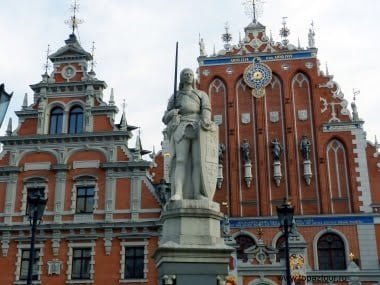
House of blackheadsThe House of the Blackheads is a famous architectural monument of the 14th century, located in the very center of Riga. Repeatedly reconstructed building was mostly destroyed during the Great Patriotic War. It was possible to restore the building today.
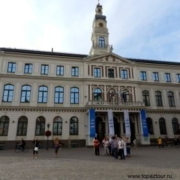
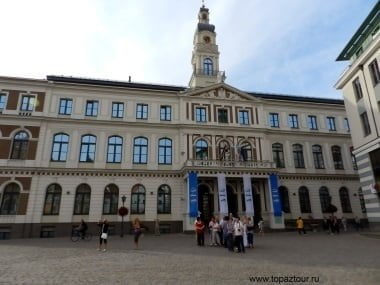
In historical documents, the building was first mentioned in 1334 as the new house of the Great Guild, and was built during the Order Occupation in the period from 1330 to 1353. At the end of the fifteenth century, the building was leased by the Blackheads and was called in those days only “The Court of King Arthur”, the current name of the house was supposedly received in the late 60s and 16th centuries.

Blackheads are a fraternity of young and unmarried foreign merchants. The brotherhood has existed since the end of the thirteenth century and is under the auspices of St. St. George, but later the patron saint of the brotherhood becomes St. Mauritius, whose symbol in the form of a black head in the coat of arms has become the hallmark of the fraternity.

The founders of the richest and most influential company were representatives of not only Riga, but also foreign companies engaged in direct delivery of goods to Riga. They also created the company of the Blackheads as a counterweight to the Big Guild of sedentary merchants in the city engaged in the repurchase of goods. But, despite the separation, the company was still under the supervision of the Big Guild until the end of the seventeenth century.

According to historical data, since 1477, Blackheads have been renting a house built for public needs by a guild of artisans. Decorating and rebuilding the building, the Blackheads over time become the sole owners of the New House. In the first half of the day the building works as a stock exchange, and in the second half of the day it is devoted to relaxation – it hosts various evenings, balls, and concerts, especially since the hall has wonderful acoustics.
At different times in this house there were clearly and secretly Russian tsars and queens. Portraits of the monarchs of Sweden and Russia served as a decoration of the hall, among them there is a portrait personally presented by Catherine the Second. So in the book of guests of honor, among the many entries there is a signature of Bismarck himself.

Along with the Great Guild, the organization led the public life of the city, took an active part in defense, and by the end of 1895 became a club of German merchants, ceasing its activities as a corporation. And since 1939, after the repatriation of the Germans, the club has been closed.

The initial appearance of the house, unfortunately, is unknown. The building covers an area of ​​425 sq.m., the main part of the house of the Blackheads is occupied by the central hall. Under the hall was a small floor divided into several rooms and a basement under it. The attic of the house served as a storage room. Despite the repeated changes and changes of the whole house – it was the hall that remained untouched, as the core of the building, which is of historical value.

Today’s view of the facade was made in the early 17th century in the style of European mannerism. According to the assumptions of Professor Wipper, the authors of the architecture of the building should be sought among the masters of Bremen, Danzig and Denmark. Nowadays, scientists suggest that this is Bodeker or Jansen. The facade is decorated with sculptures, decoration is made using art forging, another decoration is a watch. The House of Blackheads has a unique astronomical clock with a “perpetual calendar” mechanism. The three dials of the watch, in addition to time, show the date, month and year, as well as the time of sunrise and sunset and moon phase. In the museums of the history of Riga and navigation, as well as in the Architectural Museum, various fragments of the building’s decoration and parts of the interior of the Blackheads house are stored.

In 1684, a porch was completed, through which you can directly go to the second floor from the square. Another extension on two floors was built in 1794, and in 1816 another one, but from the side of the Daugava River. In the same years, the open porch replaced the covered entrance. The most recent and, perhaps, a significant change in the facade was made by the statues of Neptune, Mercury, Unity and Peace, made of zinc and installed in 1886.

In 1941, in June, the house was shelled by German troops, its ruins stood until 1948. Instead of the Town Hall Square, the area of ​​the Latvian Red Riflemen appeared with the museum and a monument to the Latvian Red Arrows instead of the Town Hall Square. After Latvia gained independence, the square was again called the Town Hall, and the museum was renamed the “Museum of the Occupation of Latvia”.

Initially, they did not intend to restore the House of the Blackheads, but by the 800th anniversary of Riga, it was still rebuilt. Before him stands a statue – a symbol of freedom, the judiciary and the protection of trade, in the form of Roland. In the house itself today is a museum and a concert hall, where concerts of symphonic music are often held.

https://balticcars.eu/wp-content/uploads/2018/06/House-of-blackheads-Riga.jpg 285 380 CST SIA https://balticcars.eu/wp-content/uploads/2018/03/fav.png CST SIA2020-02-22 12:31:372020-02-23 14:25:45House of the Blackheads
Riga town hall

Riga City Hall

22.02.2020/0 Comments/in Sights of Latvia, Sights Of Riga/by CST SIA

Riga City Hall

Riga town hallCity Hall in Riga is one of the attractions of Riga. Looking at the Riga Town Hall, one gets the feeling that she always stood in this place, but this is not so. The first building of the Town Hall took its place where the laboratory buildings of the RTU now rise. They were erected in the 60s of the 20th century. When in the 1990s they started talking about rebuilding the Town Hall, it was necessary to erect in a new, not in its historical place.

According to historical chronicles, the first building of the City Hall was located at the crossroads of two streets: Tirgonyu (Torgovoy) and Shkunyu (Sarajnoy). The townspeople were able to forcefully gain the right to have a city government after 1225. In those years, those who were dissatisfied with the authority of Bishop Albert von Buxgevden revolted. A year later, in 1226, Riga managed to defend the rights of the city and the opportunity to pursue an independent policy. This circumstance entailed the creation of the city council, as well as the construction of a building for him. The constructed City Hall was located at the so-called large gates, which were the central entrance to Riga.

The first building of Riga City Hall

It is believed that the first building of the Town Hall was destroyed as a result of the battle unleashed by the Order, when Order troops lost Riga as a result of a popular uprising in 1297. Although in 1330 the Order was able to conquer Riga. The new building, which is mentioned in written sources in 1334, was built to replace the old one on the Riga market square.

The second building of Riga City Hall

It is assumed that the second building of the Riga City Hall was built in the Gothic style, the roof was high gable. There were 6 rooms in total. The rooms on the ground floor were rented out as retail space. Every year, on the eve of the national holiday – St. Michael’s Day, when mass festivities took place, the herald from the balcony of the Town Hall read new decrees and decrees, including changes in the field of tax fees, as well as monopolies for the production of any goods (for example, beer). Speeches of heralds later received the name of burgher speeches. After 175, a musician was invited to the Town Hall balcony, who “voiced” the onset of each new hour with a melody.

The second building of the Town Hall suffered severe damage during the siege of the city by the troops of Peter I in 1709-1710. The decision to demolish the building was made only in the middle of the 18th century. At the same time, the design and construction of a new building, the third in a row, began, its construction lasted 15 years due to the fact that the government allocated funds for the construction of the new Town Hall periodically.

The third building of Riga City Hall

The third building of the Town Hall was built in the style of early classicism, the tower had baroque forms, the building itself was framed by a columned portico of the Tuscan order. In 1791, the attic was built.

The reconstruction of the City Hall building began in 1848, the young architect I.D. Felsko supervised the work. Felsko worked on improving the existing building for 2 years, the third floor was built on.

In 1877, as a result of city government reforms, the Riga Council (City Council) was abolished. The main city library of Riga is located in the Town Hall building. In addition to her, there was a bank and an orphan city court. That was until the Second World War. In the summer of 1941, the Former Town Hall building came under crushing fire, at the same time there was a big fire in which many buildings, including the Town Hall, were burned down.

The ruins of the City Hall did not touch for several years. Only after 1954, according to the decision of the Riga City Executive Committee, were they dismantled. And in the middle of the 50s of the 20th century, new buildings of the University of Riga began to be built on the site of the Town Hall. Some fragments of the Town Hall were miraculously preserved to this day: sculptural fragments of the pediment, sculpture of Themis.

Designing a new building City Hall began in the late 1990s. It was possible to implement the project only by the year 2000. The new town hall building was opened in November 2003. The new building is a copy of the historic building, which, however, is evaluated differently by architects and designers. Today, the Riga City Council is located in this building.

https://balticcars.eu/wp-content/uploads/2018/06/Riga-town-hall.jpg 285 380 CST SIA https://balticcars.eu/wp-content/uploads/2018/03/fav.png CST SIA2020-02-22 12:23:212020-02-23 14:16:07Riga City Hall
Riga Castle

Riga castle

22.02.2020/0 Comments/in Sights of Latvia, Sights Of Riga/by CST SIA

Riga castleRiga Castle is one of the most famous and popular sights of Riga, which is visited by Russian and foreign tourists with pleasure.

The castle was founded in 1330 by the master of the Livonian Order, Eberhard von Monheim. It was a three-story building encircling a square courtyard. On the ground floor there were utility rooms, on the second floor – cells of the brothers of the order, the residence of the master, meeting rooms, refectory, chapel.

In 1481, an armed struggle broke out between the townspeople and the Order. The inhabitants of Riga began the siege of Riga Castle, and its defenders were forced to lay down their arms. For three consecutive days, the townspeople smashed the walls and towers of the castle. In 1491, the order besieged Riga and surrendered the city. The townspeople had to return all the looted property of the order and build a new castle.

The master of the order Walter von Plettenberg himself drew the general plan of the castle in the form of a 4-coal building with corner towers. The construction of the new Riga Castle was completed in 1515 and fell on the last years of the power of the Livonian Order. The cubic building was fortified with two powerful round towers – the tower of the Holy Spirit and the Lead Tower. On the first floor of the castle housed household services, on the second – the chambers of the master of the order, the restroom of the brothers of the Order and the chapel. Front halls and the refectory adjoined them. After the fall of the Livonian Order, Riga Castle served as the seat of the Polish administration and retained its significance as a fortress. The garrison of the castle was about 300 horsemen and several cannons. When Riga came under the rule of the Swedes, the residence of the Swedish administration was located in the Riga Castle. In 1649, a new two-story stone building with a corner bay window was built on the site of Forburg. There is a legend that this bay window was ordered to build by Queen Christina.

At the beginning of the 14th century, Riga Castle was surrounded by a defensive moat, and in the 16th century it was fortified with an earthen rampart and bastions. In 1682, an arsenal building was added to the castle. When Riga became part of the Russian Empire, the residence of the Governor-General was located in the Riga Castle. In the XIX century the castle was rebuilt several times. From 1801 to 1803, the famous fabulist I.A. Krylov served as secretary to the Governor-General of Prince Sergei Golitsyn in Riga Castle. In 1938, Riga Castle became the residence of the President of the Republic of Latvia. From 1940 to February 1941, the Latvian Council of People’s Commissars was located in the castle, and in February 1941 the Palace of Pioneers was opened here. Currently, the southern part of the castle houses expositions of the Museum of Foreign Art, the Museum of the History of Latvia and the Rainis Museum of Literature and Art History. Since June 12, 1995, the official residence of the President of Latvia has been located in the Riga Castle.

https://balticcars.eu/wp-content/uploads/2018/04/Tour-Riga.jpg 285 380 CST SIA https://balticcars.eu/wp-content/uploads/2018/03/fav.png CST SIA2020-02-22 12:10:392020-02-23 14:20:56Riga castle
Page 2 of 212
  • Car rental with driver
    • Premium car
    • Minivans
    • Bus and minibus
  • Concierge service
    • Transfer service
    • Personal driver
    • Excursions
    • VIP center of Riga Airport
  • What to visit in Latvia
    • Sights Of Riga
    • Sights of the Vidzeme region
    • Sights of the Kurzeme region
    • Sights of the Zemgale region
    • Sights of latgale
  • Contacts
    • Booking a car
    • Bus reservation
    • privacy policy
  • English
    • Русский
    • Latviešu valoda
  • V-class Marco Polo democst
    Rent business class minivans with a driver21.12.2017 - 15:36
  • Rent a car executive class
    Rent a car executive class21.12.2017 - 15:33
  • Rent of buses and minibuses/ Аренда автобусов и микроавтобусов
    Bus and minibus rental21.12.2017 - 15:28
  • Рижский замок
    Excursions in Riga14.04.2018 - 17:28

Interesting links

Here are some interesting links for you! Enjoy your stay :)
  • Рижский замок
    Excursions in Riga14.04.2018 - 17:28
  • rundal- carste-Latvija
    Excursions in Latvia – Rundale Palace14.04.2018 - 17:16
  • Sigulda- Turaida
    Excursion to the Latvian-Castle Turaida14.04.2018 - 17:00
  • V-class Marco Polo democst
    Rent business class minivans with a driver21.12.2017 - 15:36
  • Rent a car executive class
    Rent a car executive class21.12.2017 - 15:33
  • Rent of buses and minibuses/ Аренда автобусов и микроавтобусов
    Bus and minibus rental21.12.2017 - 15:28

Archive

  • February 2020
© Copyright - Rent a car with a driver in Riga. - Enfold WordPress Theme by Kriesi
Scroll to top Scroll to top Scroll to top